How Council Tax bands work, and what a typical bill looks like for 2025/26
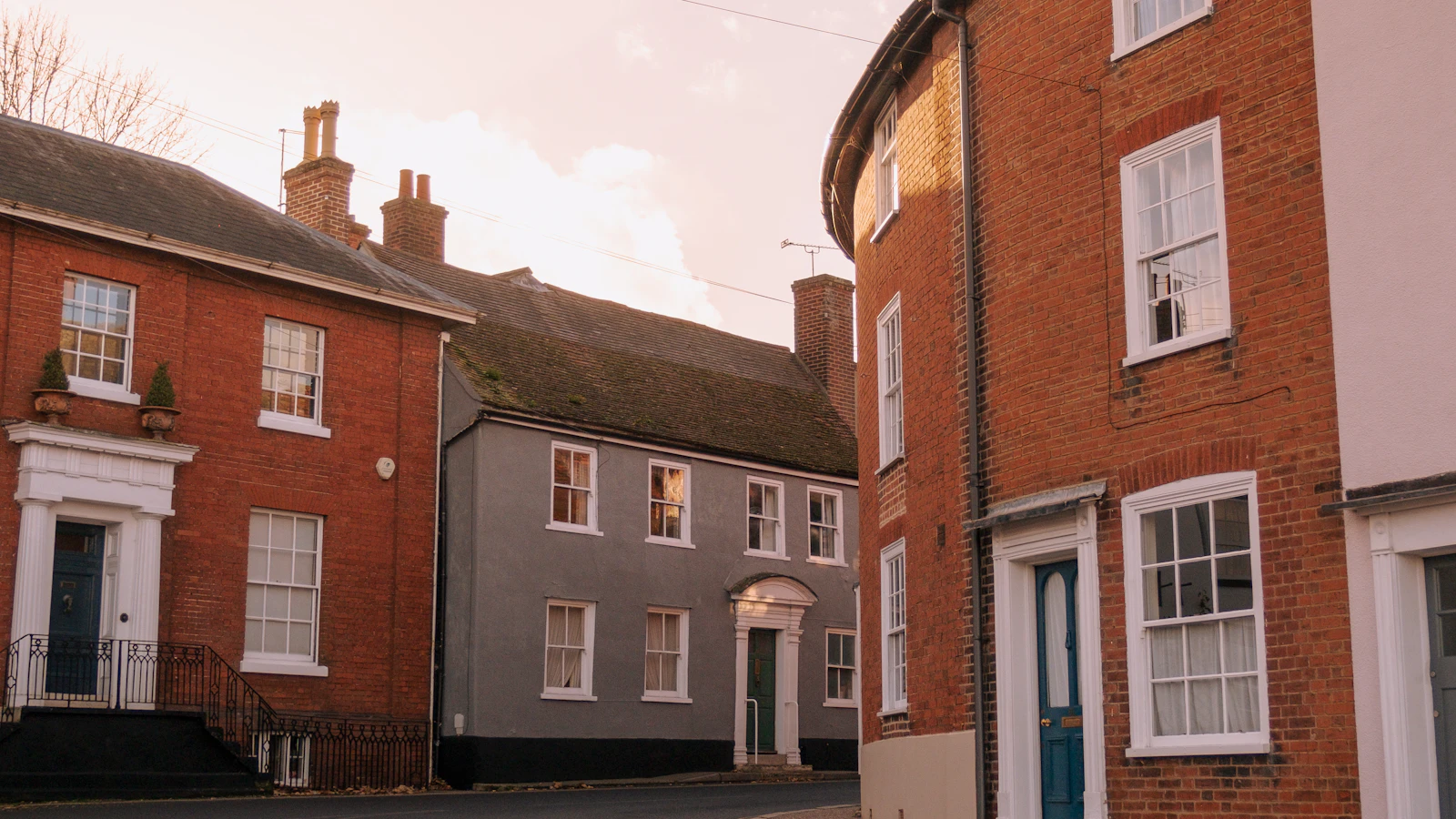
Photo by David Walker | Walker Design Co. · Unsplash
A property's Council Tax band was fixed by its 1991 value, not today's. Here is how the eight bands work, what the average Band D bill looks like for 2025/26, and who gets a discount.
Council Tax in England is charged according to eight bands, A to H, based on what a property was worth on 1 April 1991 — not what it is worth today. The average Band D bill for 2025/26 is £2,280, up 5.0% on the year before, but that figure is a national average only: what any household actually pays depends on their council, their band, and any discounts they qualify for — most commonly a 25% reduction for living alone.
How Council Tax bands work
Every home in England and Wales was assigned to one of eight Council Tax bands based on an estimate of what it would have sold for on the open market on 1 April 1991. A property built since then is still valued as if it had existed and been sold on that date, using comparable sales from the time — its band has nothing to do with what it is actually worth now, which is why two similar houses on the same street can occasionally sit in different bands if one was extended or altered after the original valuation. The Valuation Office Agency maintains the list and can move a property between bands, but only in specific circumstances such as those physical changes. This is explained on GOV.UK: How domestic properties are assessed for Council Tax bands, and anyone can look up their own home's current band at GOV.UK: Check your Council Tax band.
The eight bands in England
| Band | 1991 property value |
|---|---|
| A | Up to £40,000 |
| B | £40,001 to £52,000 |
| C | £52,001 to £68,000 |
| D | £68,001 to £88,000 |
| E | £88,001 to £120,000 |
| F | £120,001 to £160,000 |
| G | £160,001 to £320,000 |
| H | More than £320,000 |
Each council sets its own charge for Band D, and every other band is fixed by law as a proportion of that figure — Band A pays six-ninths of the Band D rate, Band H pays eighteen-ninths, and the bands in between run seven, eight, eleven, thirteen and fifteen ninths in order. That means a Band H home always pays exactly three times a Band A home in the same council area, and exactly double a Band D home, wherever in the country it sits. The proportions themselves are set out in the Local Government Finance Act 1992, section 5, and cannot be changed by an individual council.
The average Band D bill for 2025/26
The average Band D Council Tax set by local authorities in England for 2025/26 is £2,280, up £109 (5.0%) on the £2,171 average for 2024/25. That figure includes adult social care and parish precepts, the additional amounts some councils add on top of their core charge. It is published by the Ministry of Housing, Communities and Local Government in GOV.UK: Council Tax levels set by local authorities in England 2025 to 2026.
Why your own bill will not match the average
The £2,280 figure is a national average across every council in England, and actual Band D bills vary enormously either side of it — inner London boroughs with a large commercial tax base have historically set some of the lowest Band D charges in the country, while some shire counties and unitary authorities with fewer businesses to share the cost set some of the highest. Two households can be in the identical Band D and still owe noticeably different amounts simply because they live in different council areas, so the average is useful for tracking the national trend year to year but should not be treated as a reliable estimate of what any specific address actually owes. Checking the real figure means looking up the current year's rate on the relevant council's own website.
The single person discount
Anyone who is the only adult (aged 18 or over) living in their home gets 25% off their Council Tax bill. On the £2,280 national average Band D figure, that works out as a saving of £570, bringing the bill down to £1,710. The same 25% discount also applies to a household where every other resident is "disregarded" for Council Tax purposes — full-time students and certain other groups do not count towards the adult total, so a household of two adults where one is a full-time student is treated the same as a single-occupant household. This is confirmed directly on GOV.UK: How Council Tax works, and it has to be claimed through the relevant local council rather than applied automatically.
Why bills cannot rise indefinitely each year
Councils cannot simply set whatever increase they like each year without consequence. Central government sets a "referendum principle" for each type of authority: an increase above that percentage has to be put to a local referendum before it can take effect, which in practice almost never happens because losing one would cancel the whole increase. For 2025/26, most councils with social care responsibilities — county and unitary authorities — can raise their core Council Tax by up to 3%, plus a further 2% specifically ring-fenced for adult social care, for a combined 5% before a referendum is triggered; a handful of councils with particularly acute funding pressures, including Birmingham and Bradford, were given individually higher limits for 2025/26. District councils, which do not carry social care responsibilities, face a lower 3% threshold instead. These limits are set out in the technical notes accompanying GOV.UK: Council Tax levels set by local authorities in England 2025 to 2026 — technical notes, and they explain why the 5.0% national average rise for 2025/26 sits so close to the standard ceiling: most councils with social care responsibilities raised bills by close to the maximum they were permitted without a public vote.
What the bands look like applied to one council's rate
Using the £2,280 national average as a stand-in for one council's actual Band D charge — not a claim that any specific council charges this — the ratios above scale out like this:
| Band | Illustrative annual bill |
|---|---|
| A | £1,520 |
| B | £1,773 |
| C | £2,027 |
| D | £2,280 |
| E | £2,787 |
| F | £3,293 |
| G | £3,800 |
| H | £4,560 |
The pattern — roughly £250 to £300 of difference between adjacent bands at this level, widening further up the scale — repeats at whatever level a real council actually sets its own Band D charge, since the ratios are fixed nationally even though the underlying pound figure is not.
Sources
- GOV.UK: Council Tax levels set by local authorities in England 2025 to 2026
- GOV.UK: Council Tax levels set by local authorities in England 2025 to 2026 — technical notes
- GOV.UK: How domestic properties are assessed for Council Tax bands
- GOV.UK: Check your Council Tax band
- GOV.UK: How Council Tax works
- legislation.gov.uk: Local Government Finance Act 1992, section 5
This is general information, not financial advice. Council Tax rates, bands and discounts are set locally and can change each year. For your own bill, band and any discount you may be entitled to, check directly with your local council or on GOV.UK.